• English
  • Deutsch
  • Français
  • 日本語
  • ドイツ(USD $)
/

Bearings Knowledge-how to measure a bearing

STEP 1 Measuring the Bearing Bore (Inner Diameter / ID)

The bearing bore size is the measurement of the hole in the center of the bearing.

  • Best method: Use a vernier caliper for the most accurate result.

  • Steps:

    1. Insert the outer anvils of the caliper into the bearing’s bore.

    2. Open the caliper slowly until it fits snugly but not tightly against the inner ring.

    3. Read the measurement on the caliper scale in millimeters or inches.

Pro tip: If a vernier caliper is not available, a high-quality steel ruler can be used for approximate measurements.
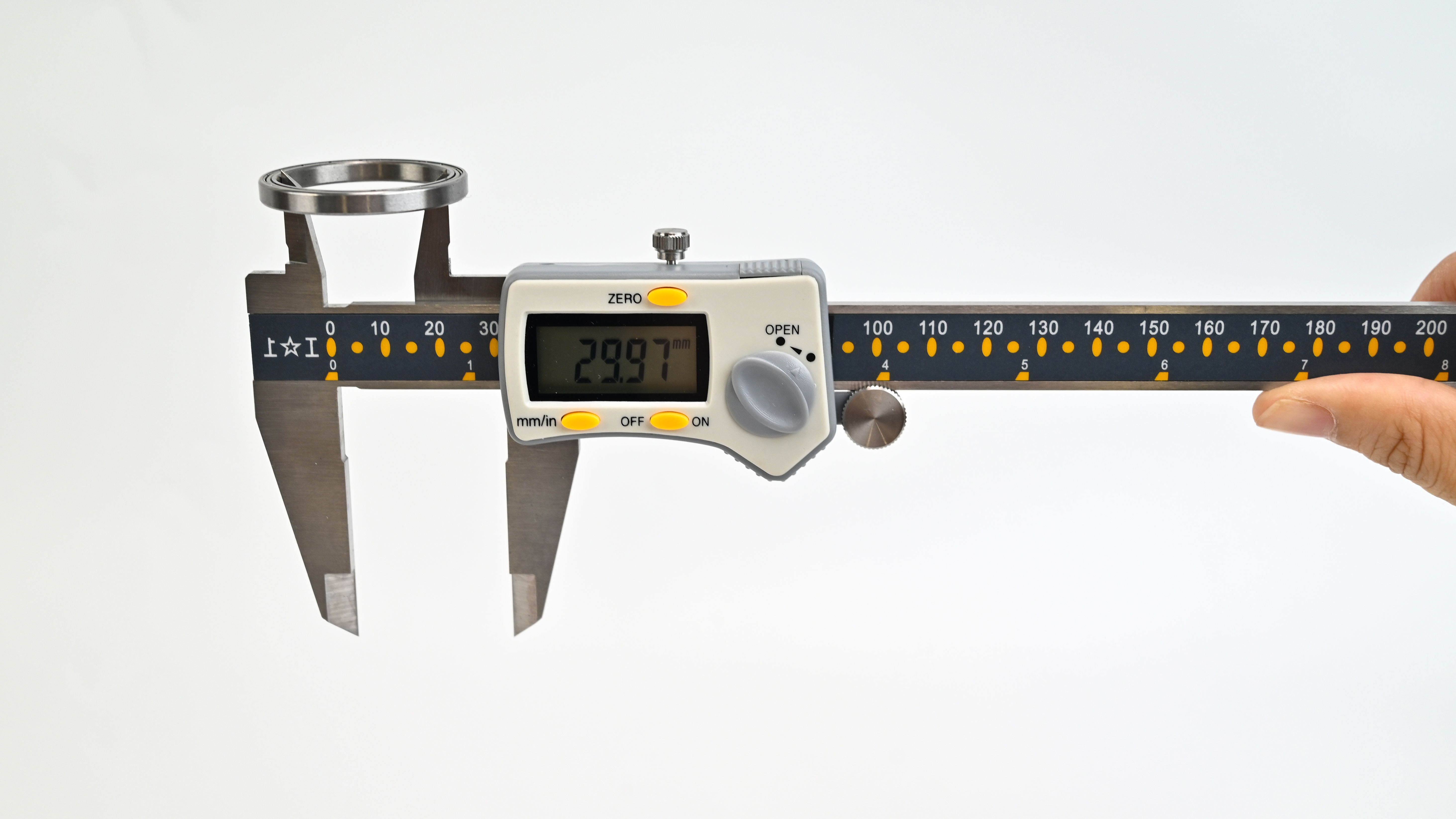
 

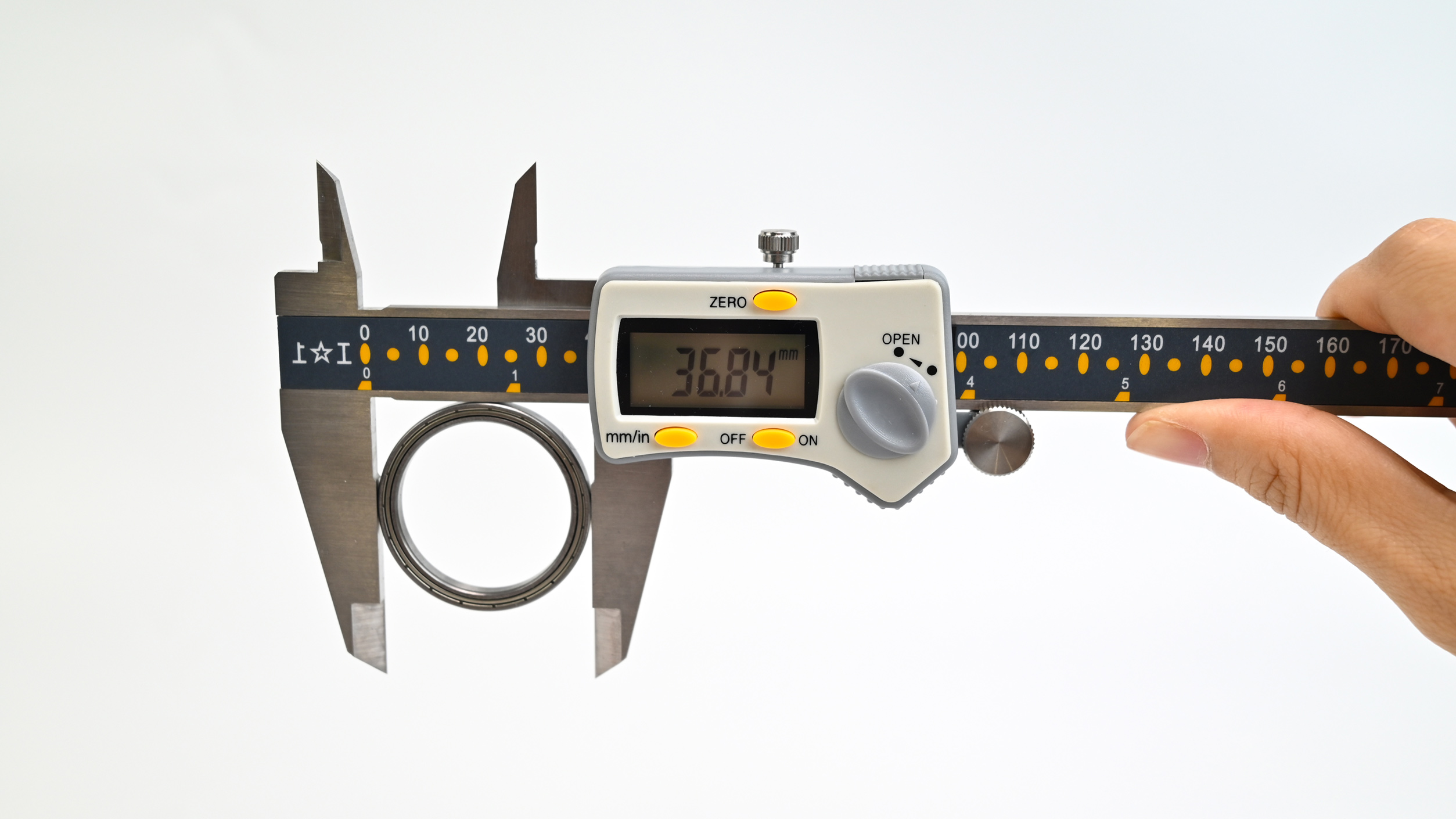
STEP 2 Measuring the Outside Diameter (OD)

The outside diameter is the total width across the bearing from one outer edge to the other.

  • Place the jaws of the caliper around the outer ring of the bearing.

  • Close the jaws gently until they make contact without compressing the bearing.

  • Record the measurement in mm or inches.

This dimension is critical when fitting the bearing into a housing or casing.
 

STEPMeasuring the Bearing Width (W)

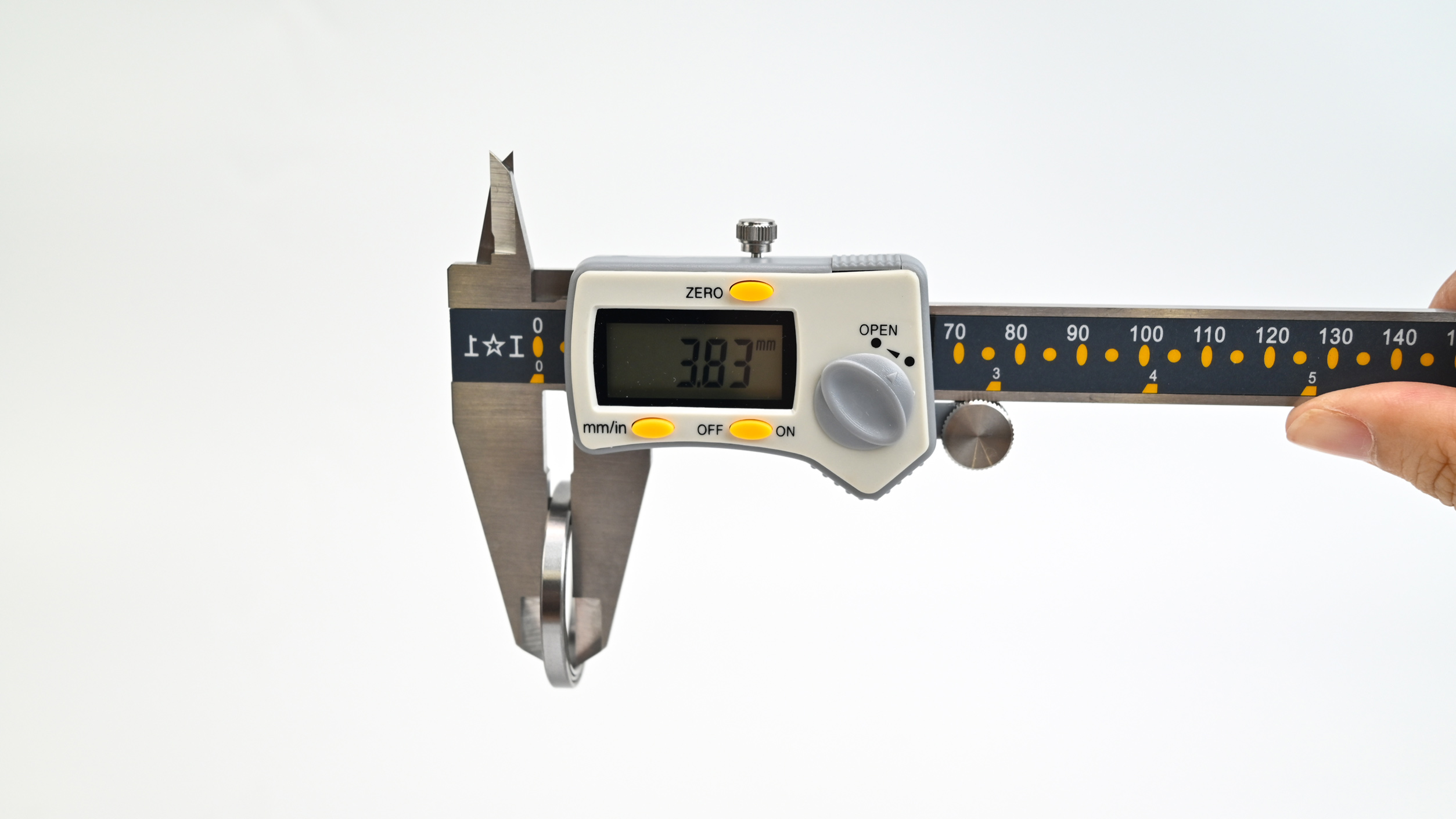
The width refers to the thickness of the bearing.

  • Position the caliper jaws on both sides of the bearing’s faces.

  • Close until snug, ensuring no extra pressure is applied.

  • Read the value to determine the exact width.
Why Accurate Bearing Measurement Matters

Choosing the correct bearing dimensions ensures:

  • Proper fit in mechanical assemblies

  • Longer service life and reduced wear

  • Smooth rotation and minimal vibration

For precise results, always use a vernier caliper and measure at least twice to confirm accuracy. This is especially important for miniature bearings and micro-sized bearings where tolerances are very tight.
2011
Partnered with leading multinational printer companies in China; shared the precision bearing market for surveying instruments; developed specialty bearings for anemometers capable of operating from -50°C to +250°C.
2012
Focused on the toy and model aircraft motor sector, achieving solid results.
2013
Developed high-temperature, long-life bearings; annual sales exceeded 20 million units in the personal care appliance sector. Secured NMB brand agency rights.
2014
Launched customized bearings for robotic joints and transmissions.
2015
Captured nearly 80% of the global drone bearing market; supplied over 5 million sets for smart lock systems.
2016
Stainless steel bearings passed 180-hour neutral salt spray tests; noise level reduced to below 25 dB.
2017
Achieved a major breakthrough in handheld stabilizers; annual revenue surpassed RMB 130 million.
2018
Developed ultra-miniature 1×Φ3×1 mm stainless steel bearings for smartphone camera modules.
2019
Mass production of 1×Φ3×1 mm bearings secured market leadership in smartphone components.
2020
Supplied precision stainless steel bearings for 5G base stations; launched large-size crossed roller bearings for smart home appliances.
2021-2024
Advanced in robotics, drones, and LiDAR applications; launched high-precision, long-lifespan, lightweight bearing series for LiDAR, SLAM modules, robotic joints, and motors. Expanded globally, completed multiple quality certifications, and strengthened industry influence in smart device components.