FPV Motor Bearings: My 15-Year Field Guide to Picking Right
Aug 19,2025 | Lumi Manufacturering Technology
I write this for you. You want clean flights and stable data. I keep it simple. I use short sentences. I share what works on the bench and at the field. Two builds can share the same motors, props, and tune. One rips. The other runs hot or quits mid-heat. The hidden cause is often small. Precision ball bearings with the wrong fit, clearance, seal, or lube. I match bearings to your flight style, environment, and assembly stack. I prove each pick with current, temperature, and runout. Pick once. Fly right
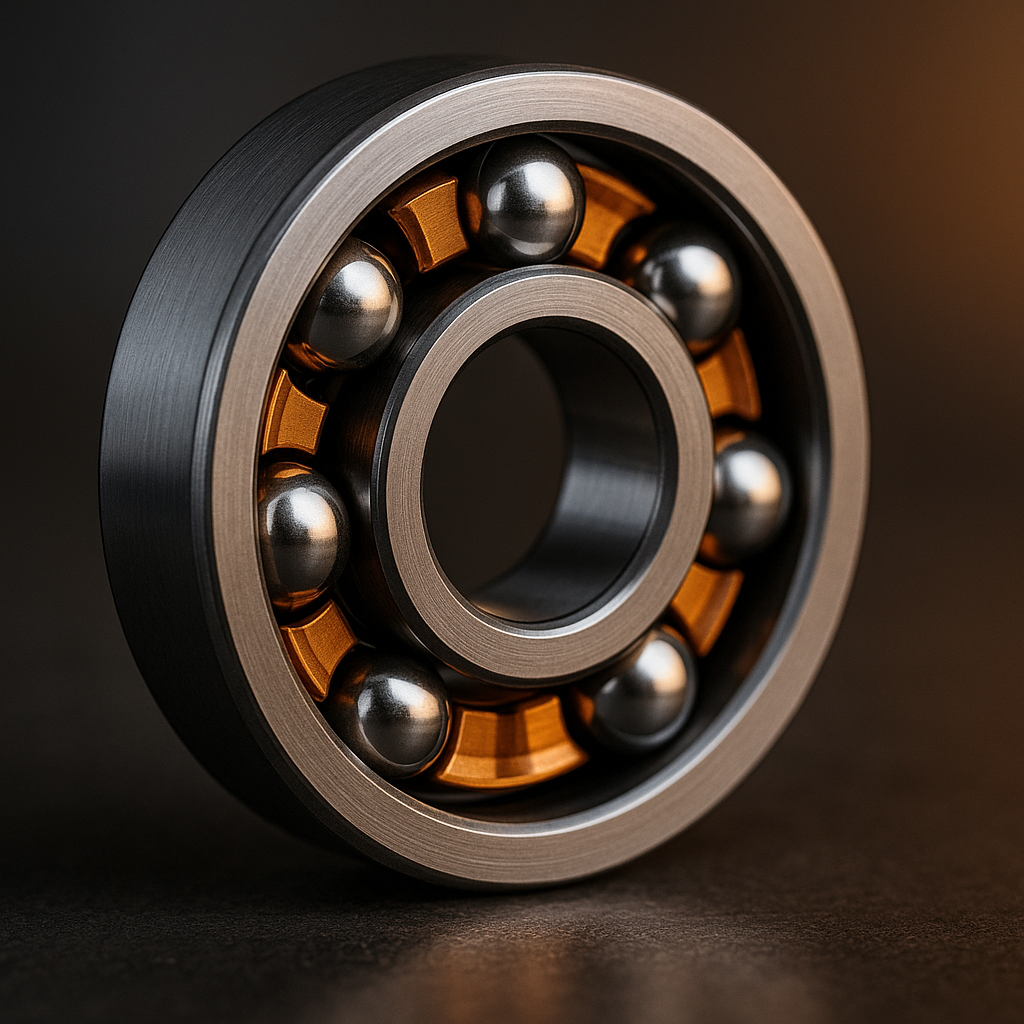
I always start from your goal. Racing needs low drag and instant spool. I choose light oil or light micro-grease and a small fill. I keep seals low torque. You feel snap and crisp throttle. Freestyle takes hits and fast reversals. I prefer tougher cages and a modest grease fill for damping. You get smooth lines and calmer audio. Long-range lives on efficiency and clean running. I use low-torque 2RS seals and a stable grease that lasts. You trade a little drag for reliable packs and longer time in the air.
Size and fit decide if the motor stays true at speed. Most FPV motors use MR85 (5×8×2.5), MR74 (4×7×2.5), or 693 (3×8×4). I confirm your shaft and housing tolerances first. A perfect bearing still fails if the fit crushes it. I set a light interference on the inner ring to stop creep. I keep the outer ring near transition in thin aluminum to avoid ovalization. I press the ring I seat. I never push through balls or cage. After assembly I check bell TIR. I aim for 10–15 μm or less. If the number climbs, I fix the fit before I fly.
Material choice follows the mission, not the hype. I use 52100 steel for most builds. It feels fast and clean. I switch to 440C when dew, spray, or coastal air threaten. I choose hybrid ceramic only when heat and RPM climb together. The balls are lighter. Drag can drop. But hybrids need careful fits and a light preload. Poor assembly erases the gain. If you want a quick primer, read Ball bearing (Wikipedia): https://en.wikipedia.org/wiki/Ball_bearing and Rolling-element bearing (Wikipedia): https://en.wikipedia.org/wiki/Rolling-element_bearing. To sense seasonality, I check Google Trends for FPV: https://trends.google.com/trends/explore?geo=US&q=fpv%20drone. For mainstream stories, I skim NYTimes drone racing coverage: https://www.nytimes.com/search?query=drone%20racing.
Clearance and preload must survive heat soak. Assembly eats clearance. Heat eats more. Tight inner fits and hot shafts can crush C0. I choose C3 when your stack runs hot or the fit is tight. I add only minimal preload. Just enough to kill play. Too much raises current and heat. I confirm the balance at a fixed RPM. I log current and watch a short temperature run. If the motor warms too fast, I reduce preload or change clearance. I want smooth sound and stable current, not a quiet bench that turns noisy in the air.
Lube is a tuning knob. Racing wants low torque. I use light oil or light micro-grease at 10–20% fill. Freestyle and long-range need staying power. I use stable micro-grease at 20–30% fill. I never overfill. Churn heats the motor and steals flight time. I keep motors clean because dust turns any lube into paste. I store spares in sealed bags. I label the grease type and fill. When a program demands re-lube, I schedule it by hours and environment, not by guesswork.
Seals and shields set how clean the race stays. ZZ shields run fast on clean tracks and indoors. 2RS low-torque seals block dust and spray at bandos and fields. I often mix them. I use ZZ on the inner side and a low-torque 2RS on the exposed side when the motor design allows. I pick the setup before the event, not after a failure. I carry both styles in the pit box. I switch when the venue changes.
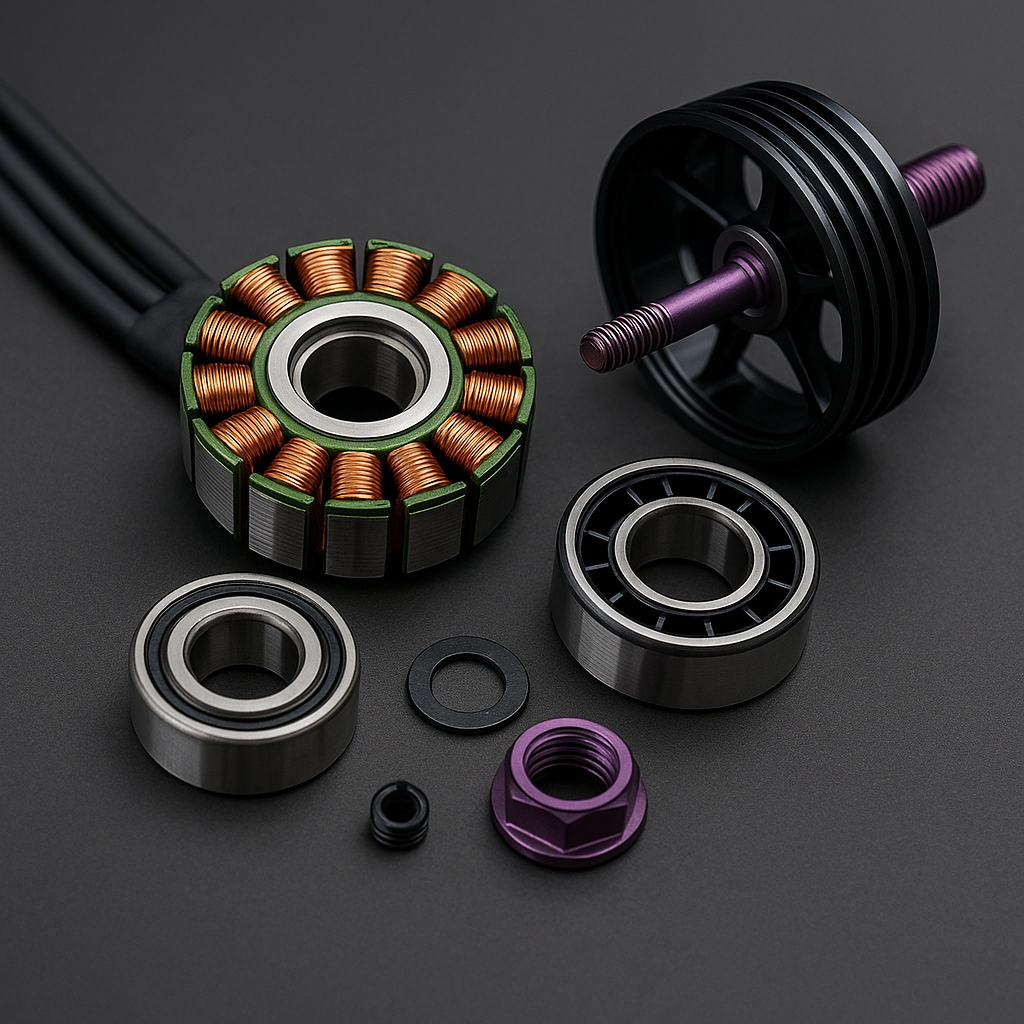
I validate choices with simple checks. I log hover current on a known pack. I watch temperature rise over two minutes. I measure bell runout with a dial indicator. Small changes add up. The right bearing and lube cut amps, lower heat, and extend flight time. On a 5″ rig with the same tune, I often see about −0.8 A when I move from 2RS to ZZ on a clean track. Motor temperature drops by 3–5 °C. Flight time grows by about 50 seconds. Dirt flips the story. I go back to 2RS and accept a little drag. The finish rate climbs, and the day goes better.
Field lessons sharpened every one of these calls. Dusty gates once killed a whole weekend. Shielded bearings jammed. I switched the team to low-torque 2RS and a modest grease fill. They finished every heat. A brand fought KV drift across packs. C0 pinched after heat soak. I moved them to C3. Hover current dropped. KV stayed true. Pilots felt the change on the first pack. On a clean indoor track I chose ZZ and light oil for a sprint crew. Starts felt instant. Motors landed cooler. The data and the smiles agreed.
I do not guess on quality. I test. I measure spin-up and run-down time for drag trends. I record starting torque on a small rig. I read bell runout. I run salt-spray when moisture threatens. I push accelerated life at heat to screen grease and cage. I require batch IDs, grease fill by weight, hardness data, and SPC with Cp/Cpk at 1.33 or better on key dimensions. I keep the numbers with the lot so I can trace any issue fast. This discipline protects race days and production ramps.
I audit suppliers with the same focus. I walk the heat-treat line. I check clean assembly cells and filtration. I confirm measured lube fill, geometry, and surface finish data. I review material certificates and storage. I confirm RoHS and REACH on file. RoHS: https://en.wikipedia.org/wiki/Restriction_of_Hazardous_Substances_Directive. REACH: https://en.wikipedia.org/wiki/Registration,_Evaluation,_Authorisation_and_Restriction_of_Chemicals. I review change control so no one swaps a cage or grease mid-season without notice. I want a pilot-to-mass plan with a real control plan. Good process beats heroics.
People ask me the same questions. Which sizes fit most FPV motors? I see MR85, MR74, and 693 most often. Steel or hybrid ceramic? I pick steel first and use hybrid for extreme RPM and heat. ZZ or 2RS? Clean track uses ZZ. Dust or grass needs low-torque 2RS. Mixing works well. C0 or C3 clearance? Hot cans and tight fits need C3. Cool and loose stacks can run C0. How do I spot a failing bearing? Listen for roughness. Watch higher hover current. Check extra heat and KV drift. When in doubt, replace with known-clean parts. Time is cheaper than a race DNF.
Here is my bottom line. The right precision ball bearings set the tone for your motor. I start from your flight style. I match sizes and fits to your parts. I choose material for your environment. I set clearance and a light preload. I tune lube for torque and life. I choose shields or seals for your field. Then I prove it with current, temperature, and runout. This process keeps flights clean and longer with fewer surprises. If you want a one-page checklist, download it here: https://www.lumimt.com/resources/fpv-bearing-checklist. If you need a common size, start here: https://www.lumimt.com/products/mr85. If you want the theory behind clearance and preload, read this note: https://www.lumimt.com/blog/bearing-clearance-preload. If you prefer to see a quick bench demo, watch the 30-second test here: https://www.lumimt.com/videos/zz-vs-2rs.
Kommentar