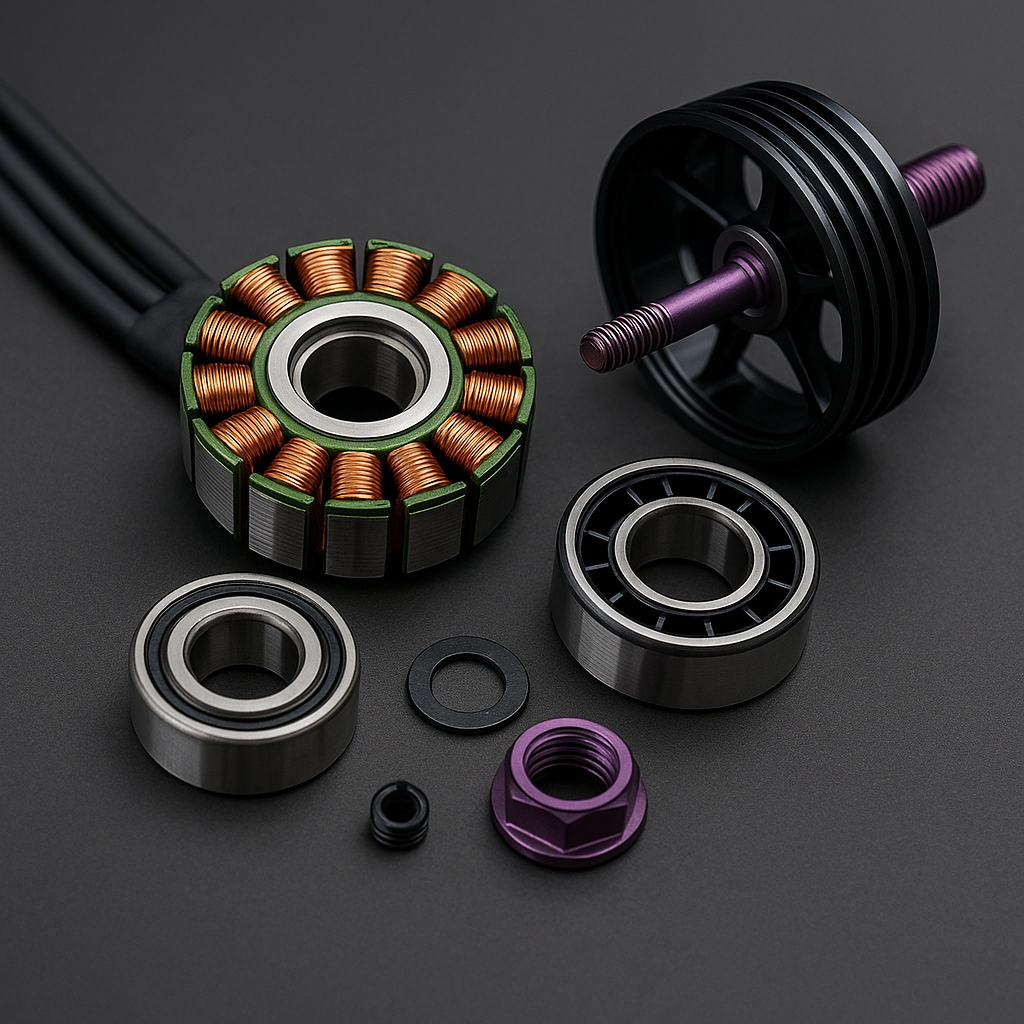
How to Choose Suitable Precision Ball Bearings for Your Motor
Aug 15,2025
How to Choose Suitable Precision Ball Bearings for Your Motor?
Discover how to choose the right precision ball bearings for your motor. Learn key factors, avoid mistakes, and boost motor performance today!
I. Introduction
Precision ball bearings might be small components in a motor, but their impact is huge. They reduce friction, support rotational movement, and directly influence the motor’s efficiency and lifespan. Choosing the right precision ball bearing is essential—not only for optimal performance, but also for safety and saving costs in the long run. This blog explains what precision ball bearings are, discusses the main factors to consider when selecting them, highlights common mistakes, and provides actionable tips to help you make an informed choice.
II. Understanding Precision Ball Bearings
What are Precision Ball Bearings?
Precision ball bearings are engineered devices designed to facilitate smooth rotation and minimize friction between moving parts in motors. Manufactured to tight tolerances, they are critical to ensuring reliable and efficient motor operation.
Common Applications in Motors
Precision ball bearings are found in almost every type of motor: from small hobby motors and cooling fans to high-speed industrial and automotive machinery.
Key Benefits of Using Precision Bearings
- Reduced friction and heat
- Increased motor lifespan
- Enhanced load handling
- Improved operational efficiency and reliability
III. Factors to Consider When Selecting Ball Bearings
A. Load Requirements
Understand the nature of loads in your application—radial (perpendicular to shaft) and axial (parallel to shaft). Check the bearing’s load ratings to ensure compatibility with your motor’s operational conditions.
B. Rotational Speed
Know your motor’s maximum RPM. Precision bearings are designed to run smoothly at specified speed limits. Selecting a bearing that matches or exceeds your motor’s speed ensures longevity and optimal function.
C. Accuracy and Tolerance
Evaluate bearing grades, such as ABEC or ISO standards. Higher-grade bearings offer tighter tolerances, which translates into smoother movement and improved motor efficiency.
D. Environmental Conditions
Consider the working environment—temperature fluctuations, exposure to dust, humidity, or chemicals. Select bearings with appropriate seals, shields, or materials for harsh conditions.
E. Lubrication Needs
Bearings require sufficient lubrication. Options include greased, oiled, or sealed bearings. Assess maintenance requirements and the suitability of each lubrication type for your specific application.
F. Bearing Material
Choose between steel and ceramic ball bearings. While ceramic balls provide superior durability, corrosion resistance, and higher speeds, they may cost more than traditional steel bearings.
IV. Matching Bearings to Motor Application
Small Electric Motors: Use low-load, low-speed bearings, typically steel, with minimal maintenance.
High-Speed Industrial Motors: Opt for precision bearings with high RPM ratings and advanced lubrication systems.
Heavy-Duty Motors (Automotive/Machinery): Favor robust bearings with high load capacities, improved seals, and enhanced material quality.
- Example: An industrial mixer motor running in a dusty environment should use sealed bearings with appropriate lubrication and corrosion resistance.
V. Common Mistakes to Avoid
- Overlooking compatibility with the motor’s design and specs
- Ignoring recommendations from the motor or bearing manufacturer
- Neglecting the impact of environmental factors
- Choosing bearings solely based on price rather than performance and durability
VI. Tips for Working with Suppliers
- Provide accurate and detailed motor specifications to ensure correct bearing selection
- Leverage technical support for customized solutions and troubleshooting
- Always review warranties, certifications, and quality standards to minimize risk
VII. Conclusion
Choosing suitable precision ball bearings for your motor is not just about selecting a part—it’s about maximizing performance, reliability, and safety. Consider the load, speed, accuracy, environment, lubrication, and material. Avoid common mistakes, work closely with suppliers, and never compromise on quality. Invest in the right bearings today and consult experts or request quotes for your next project to ensure your motor performs at its best.
Ready to upgrade your motor’s performance? Contact us for expert consultation or request your precision ball bearing quote today!
Comment